
Begin with either a Structural Fingerprint® Exam or the Dr. Maggs® Leg Length Test. These assessments identify biomechanical imbalance and guide an individualized plan.
Why it matters: Better structural balance can improve weight distribution and provide a clearer foundation for care.
Your clinical plan may include orthotics, chiropractic adjustments, Erchonia low -level laser therapy and spinal decompression. Each service is selected according to your examination findings and needs.
Why it matters: Orthotics support better structural balance and weight distribution, while targeted care addresses joint restriction, painful tissues and the effects of spinal compression associated with age, stress and injury.
Participate in the Structural Fingerprint® Stretch Program with Coach Trevis Wyche. The program emphasizes purposeful, individualized stretching —not random flexibility work.
Why it matters: Improved mobility can support more efficient movement, physical confidence and athletic performance.
Dr. Maggs® Myofascial Release with Dr. Erin Paolozzi identifies and treats areas of dysfunctional or restricted fascia.
Why it matters: Reducing soft-tissue restriction may improve comfort, mobility and movement quality.
.avif)

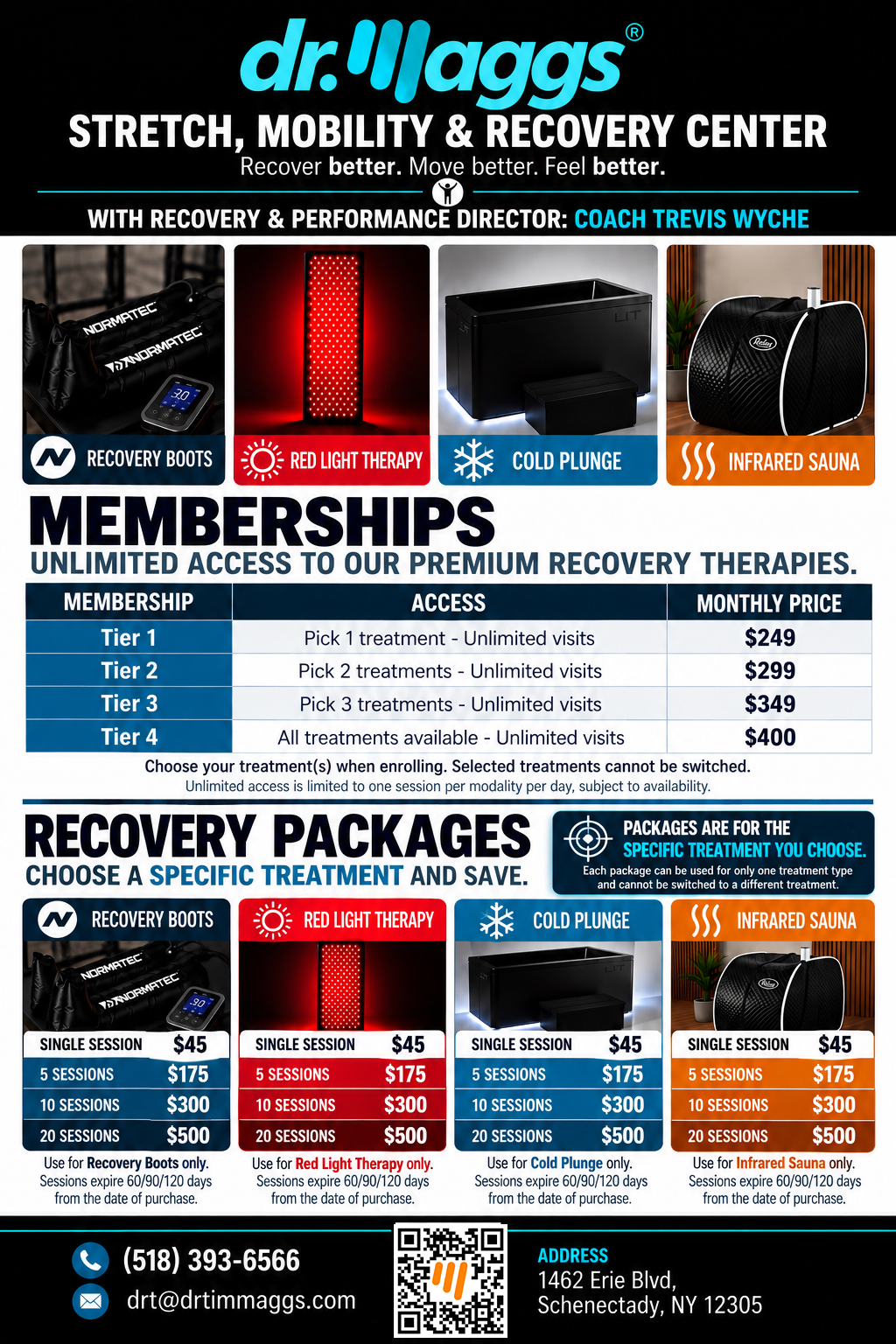
Red and near-infrared light provide broad photobiomodulation across larger areas of the body.
Why it matters: Useful for general muscle recovery, soreness and supporting normal cellular repair processes.
Sequential pneumatic compression gently inflates from the feet upward, creating a rhythmic, massage -like effect through the legs.
Why it matters: Especially useful for heavy, tired legs and for reducing perceived post-exercise soreness.When the loading of a tissue exceeds the capacity of that tissue compensatory physiological changes occur.
Whole-body infrared heat promotes sweating, warmth, relaxation and peripheral circulation.
Why it matters: May help reduce stiffness, support heat conditioning and provide a calming recovery experience.
Cold-water immersion is used selectively rather than automatically. It is most appropriate when short -term soreness reduction and readiness for another event are the priorities.
Why it matters: Can help an athlete feel refreshed between demanding practices, games or competitions; routine immediate use after strength training may not be appropriate.
You may not need all eight steps or every modality at each visit. Your program should reflect your examination findings, health history, training schedule and recovery goals. Please tell our staff about cardiovascular disease, blood clots, circulation problems, neuropathy, pregnancy, open wounds or other significant medical concerns before using compression, heat or cold modalities.
Mondays:
8 am - 12 pm &
3 pm - 6:30 pm
Tuesdays:
3 pm - 6:30 pm
Wednesdays:
8 am - 12 pm &
3 pm - 6:30 pm
Thursdays:
Closed
Fridays:
8 am - 12 pm &
3 pm - 6:30 pm
Saturdays:
Closed
Sundays: Closed
Mondays:
8 am - 2 pm
Tuesdays:
8 am - 2 pm
Wednesdays:
8 am - 5 pm
Thursdays:
8 am - 2 pm
Fridays:
8 am - 2 pm
Saturdays:
8 am - 12 pm
Sundays: Closed


