Blog
Correcting the Foundation—Why the Feet Come First in Structural Management®
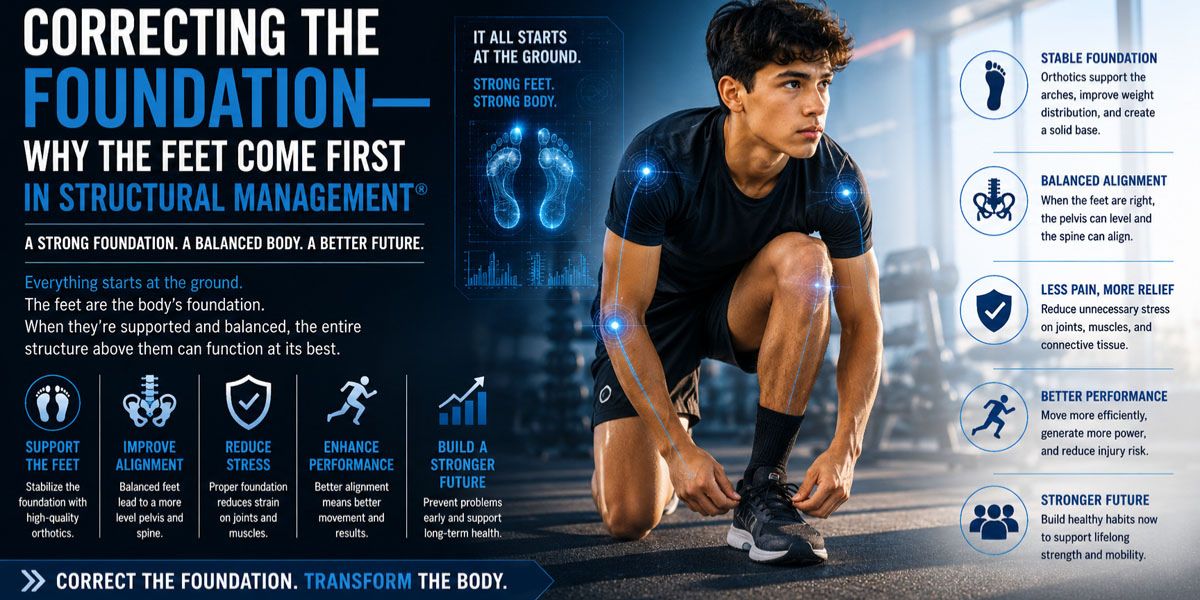
In engineering, one principle stands above all others: a structure is only as strong as its foundation. Whether it is a bridge, a skyscraper, or a complex mechanical system, long-term stability and performance depend on the integrity of the base. When the foundation is compromised, the structure above it is forced to compensate, often leading to stress, distortion, inefficiency, and eventual failure. This same principle applies directly to the human body, and within Structural Management®, the feet represent that critical foundation.
The human body functions as a vertical, load-bearing system constantly influenced by gravity. Every movement—standing, walking, running—begins at the feet, which serve as the interface between the body and the ground. When functioning properly, the feet provide stability, absorb shock, and distribute forces efficiently throughout the kinetic chain. However, when the feet collapse or function asymmetrically, these essential roles are disrupted. Research and clinical observation consistently demonstrate that all individuals exhibit some degree of foot collapse, approximately 70% of people have one foot that is more collapsed than the other, and this collapse progresses over time. These are not minor variations; they are foundational issues that directly influence the alignment and function of the entire body.
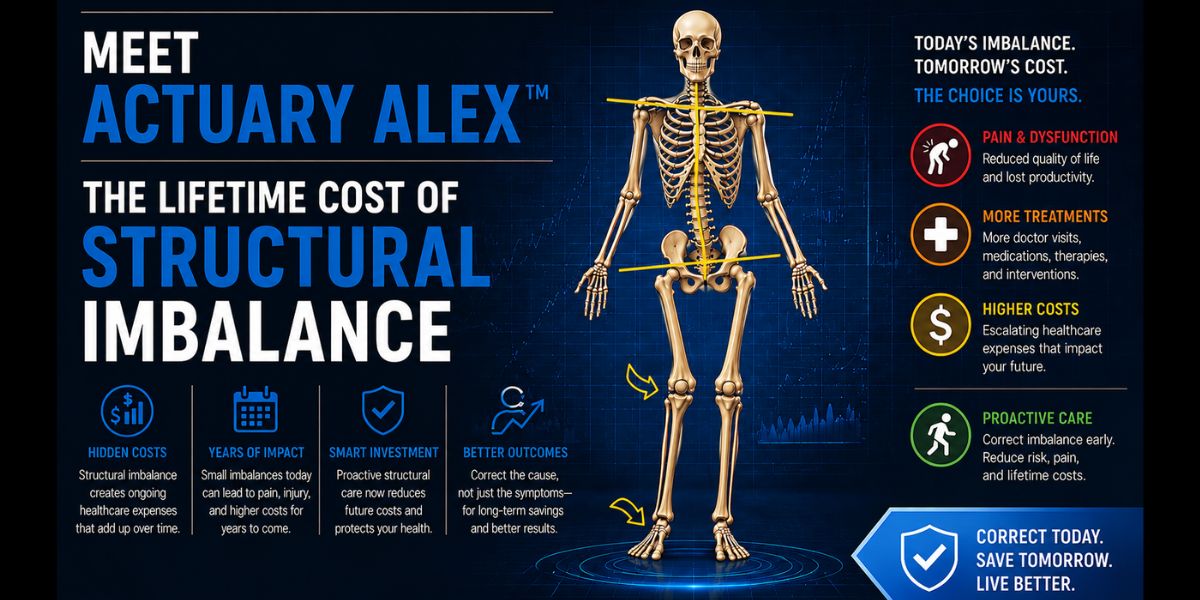
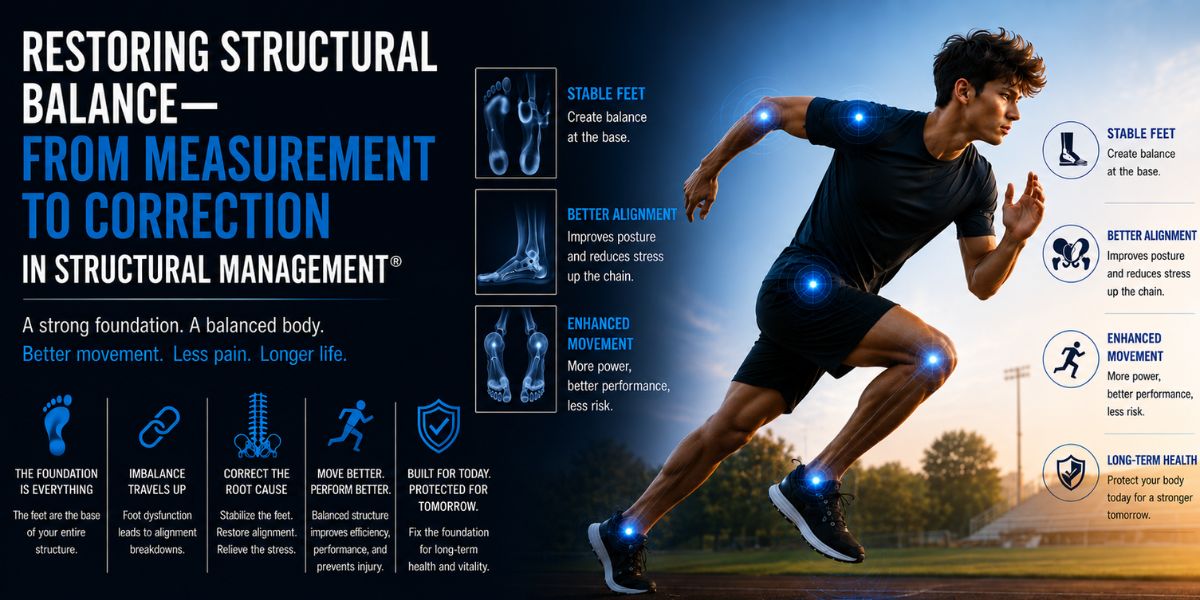
Because the body operates as an interconnected system, often referred to as the kinetic chain, problems at the foundation inevitably travel upward. When the feet lose stability, the ankles compensate, the knees shift, the hips adjust, and the pelvis becomes imbalanced. The spine then adapts in an effort to keep the body upright and functional. By the time symptoms appear—whether in the knees, hips, or lower back—the original cause may be far removed from the site of pain. This is why treating symptoms alone often produces only temporary results. Without correcting the foundation, the system remains unstable, and the same compensatory patterns continue to drive dysfunction.
This explains a common and frustrating experience in musculoskeletal care: patients improve with treatment, only to have their symptoms return. From a Structural Management® perspective, this is not surprising. If the feet remain unstable, the forces acting on the body remain unchanged. Even if alignment is temporarily improved through adjustments or therapy, the underlying imbalance persists, and the structure will gradually revert back to its previous state. True, lasting correction cannot occur without first stabilizing the base of the system.
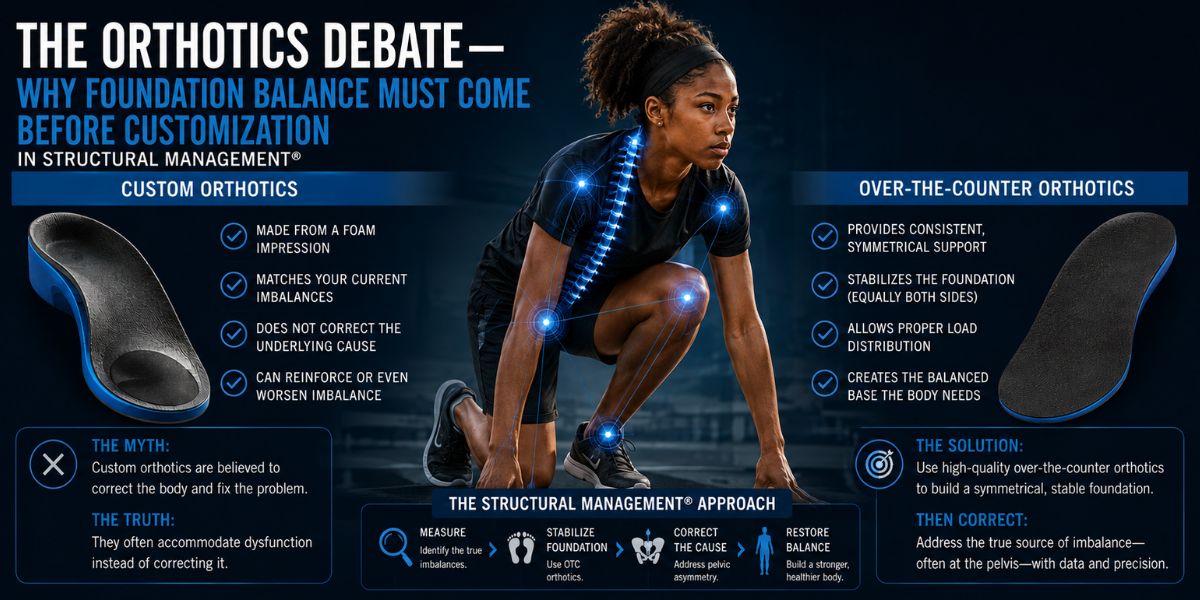
Correcting the foundation begins with accurate measurement, which is achieved through the Structural Fingerprint® Exam. This exam provides objective data on how the feet are functioning under load, revealing asymmetries, collapse patterns, and their impact on the rest of the body. Once identified, the goal is to restore stability and symmetry at the foundation. This is most commonly accomplished through high-quality orthotic support designed not merely for comfort, but for structural correction. Proper orthotics stabilize the arches, improve weight distribution, and create a balanced platform upon which the rest of the body can align.
The relationship between the feet and pelvic alignment is particularly significant. Asymmetrical foot collapse can lead to uneven femoral head height at the level of the hips, creating an imbalance that affects load distribution throughout the spine. In many cases, stabilizing the feet results in meaningful improvement in pelvic alignment. However, as identified through the Structural Fingerprint® Exam, approximately 70% of individuals may still exhibit a measurable femoral head height difference even after orthotic correction. When this occurs, additional intervention—such as a heel lift applied to the appropriate side—may be necessary to fully balance the system. This reinforces an essential principle: foundation correction is not a one-step solution, but a measured and refined process.
Once the foundation is stabilized, the entire body begins to function more efficiently. Load is distributed more evenly, compensation patterns are reduced, joint stress decreases, and movement becomes smoother and more energy-efficient. In engineering terms, a stable base allows the structure above it to operate within optimal tolerances, significantly reducing the risk of failure. Over time, this improved efficiency can slow degenerative processes, reduce the likelihood of injury, enhance balance and stability, and support long-term musculoskeletal health.
The long-term impact of correcting the foundation extends far beyond symptom relief. By addressing the root cause of structural imbalance, it reduces the need for repeated treatments and ongoing care. It allows the body to function as it was designed, rather than constantly adapting to instability. Perhaps most importantly, it shifts the focus of care from reactive treatment to proactive correction, aligning with the core principles of Structural Management®.
Ultimately, correcting the foundation requires a shift in thinking. Instead of asking where the body hurts, we must ask where the system is unstable. This change in perspective transforms both diagnosis and treatment, allowing for more precise, effective, and lasting outcomes. Within Structural Management®, there is a clear sequence: first measure the structure through the Structural Fingerprint® Exam, then correct the foundation, address remaining imbalances, and finally optimize function and performance. Skipping the foundation step compromises everything that follows.
The feet are not just another part of the body; they are the base upon which the entire system depends. When that base is unstable, the body is forced into compensation. When it is corrected, the entire structure has the opportunity to realign, rebalance, and function more efficiently. In this way, correcting the foundation is not simply one component of care—it is the key to unlocking lasting structural change and long-term health.
All Blog Articles