Blog

The Structural Fingerprint® Exam—The First Step in Structural Management®
The Structural Fingerprint® Exam represents the critical first step in Structural Management® because it brings objective measurement to a system that has historically relied too heavily on symptoms and observation. As established in the foundational principles of this work, the human body functions as a mechanical system governed by the same laws that apply to engineered structures—where alignment, load distribution, compensation, and tolerance determine performance and longevity. If this is true, then accurate measurement is not optional; it is essential. The Structural Fingerprint® Exam provides a systematic, measurable, and repeatable method of identifying each individual’s unique biomechanical blueprint, recognizing that no two people are structurally identical. Just as fingerprints are unique, so too are the alignment patterns, asymmetries, and load distributions within the human body, all shaped by genetics, growth, injury, habit, and environment over time. Without measurement, these differences remain hidden, and care becomes generalized rather than precise.
In many cases, pain is not a reliable indicator of the true source of dysfunction. Due to compensation patterns within the kinetic chain, symptoms often appear far from their origin. A patient presenting with knee pain may actually have a foundational imbalance in the feet, while neck pain may be driven by pelvic asymmetry. The Structural Fingerprint® Exam eliminates this uncertainty by providing quantifiable data that identifies where the body is asymmetrical, how load is distributed from side to side, and whether these deviations fall within acceptable structural tolerances or require correction. This allows practitioners to focus on the cause rather than the symptom, fundamentally improving the accuracy and effectiveness of care.
The exam itself is comprehensive, integrating multiple layers of assessment to create a complete understanding of both structure and function. At its core is standing, weight-bearing imaging, which evaluates the body under real-life conditions where gravity and load are actively influencing alignment. Key X-ray views of the cervical spine, lumbar spine, and pelvis reveal critical information such as femoral head height differences, spinal curvature, disc integrity, joint spacing, and centers of gravity—details that cannot be fully appreciated through external observation alone. This internal data is complemented by postural and balance assessments that evaluate spinal range of motion, joint mobility, knee alignment, and foot function, providing insight into how the structure behaves in both static and dynamic states.
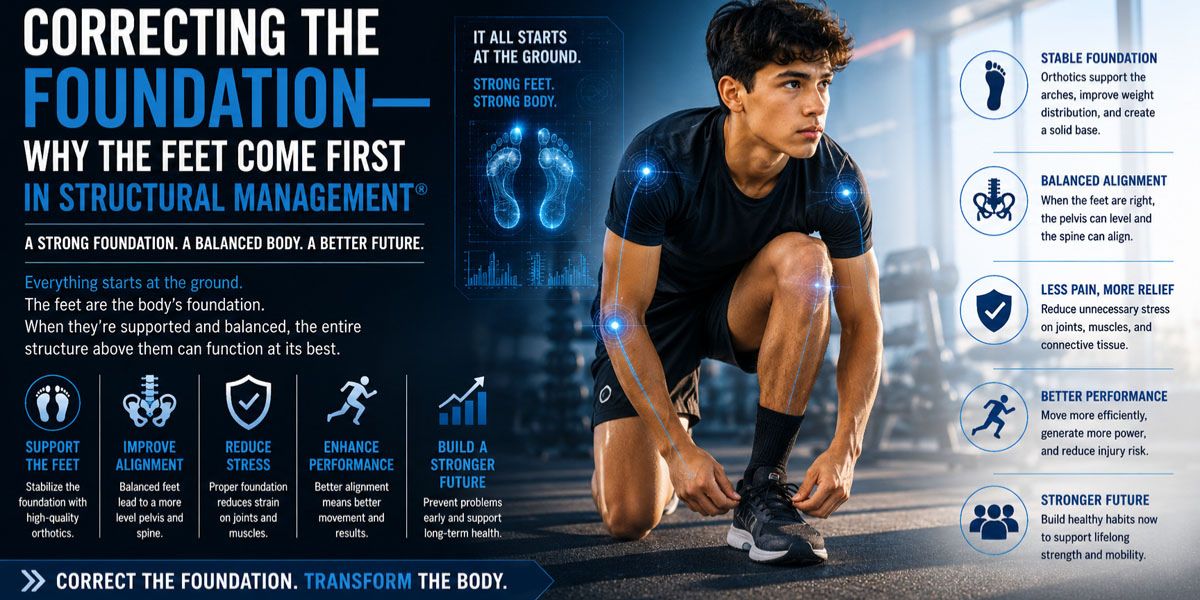
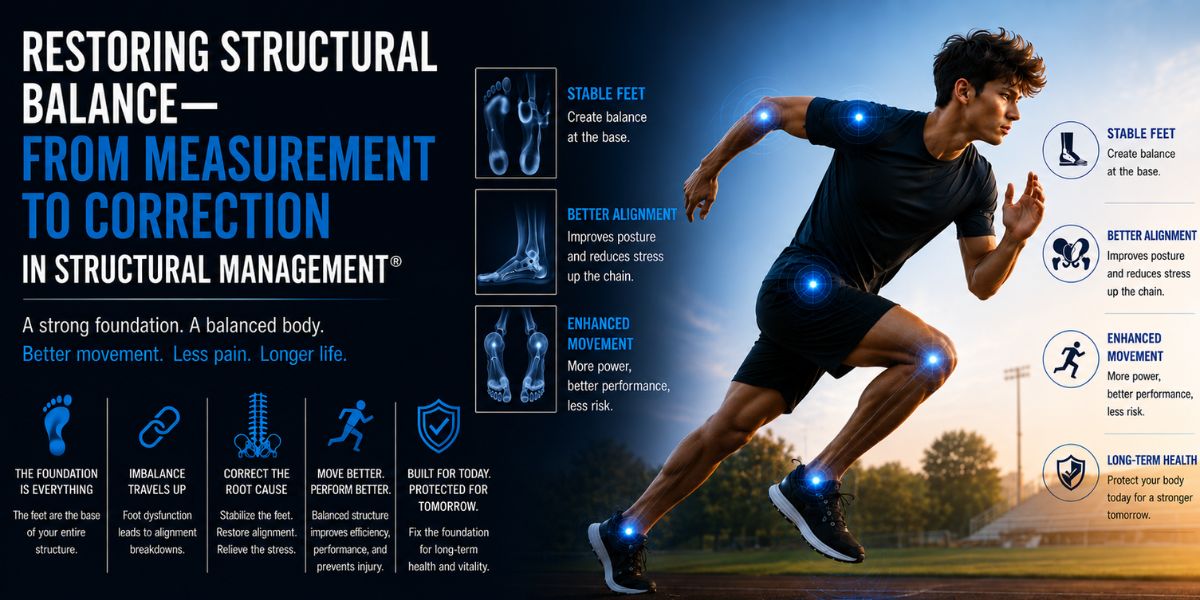
Particular emphasis is placed on the feet as the foundation of the entire system. Research and clinical findings consistently demonstrate that all individuals exhibit some degree of foot collapse, approximately 70% have asymmetrical collapse between left and right, and this condition progresses over time. Because the feet directly influence the alignment of the knees, hips, pelvis, and spine, identifying and addressing these foundational issues is essential for achieving full structural correction. The Structural Fingerprint® Exam captures this information early, allowing for targeted interventions that stabilize the base and improve overall alignment.
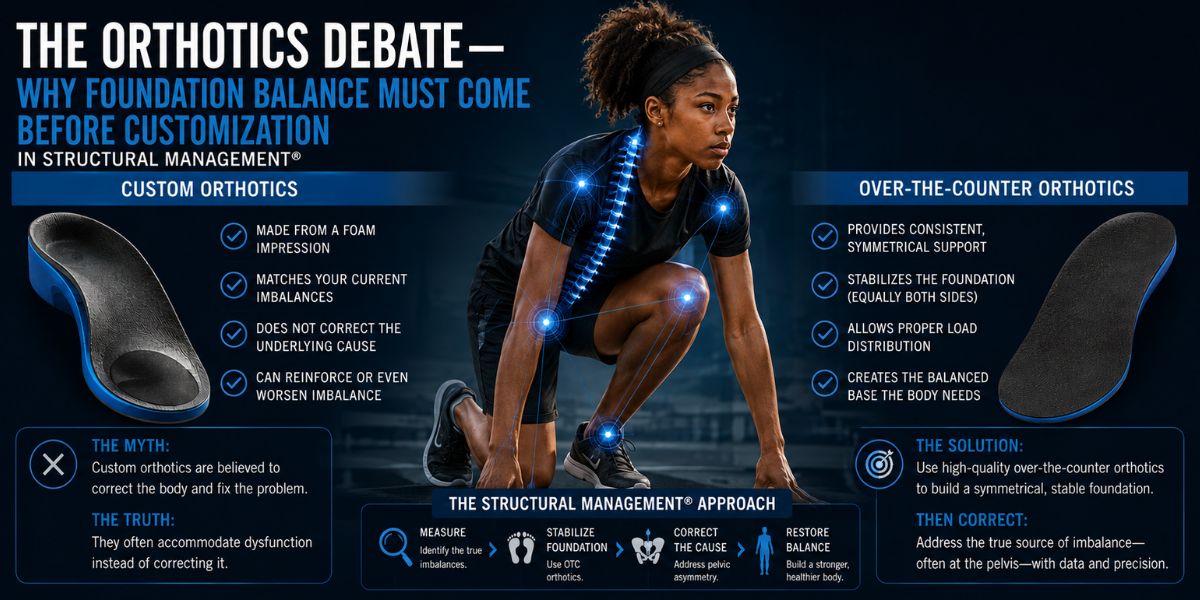
The value of the exam lies not only in the data it provides, but in how that data is used to guide care. Once structural deviations are identified, a personalized corrective strategy can be implemented, which may include orthotic support to stabilize the feet, heel lifts to address femoral head height discrepancies greater than 3mm, and other structural interventions such as chiropractic adjustments, spinal decompression, or laser therapy. Importantly, the process does not end with the initial assessment. Follow-up measurements create a feedback loop, allowing practitioners to objectively track progress and refine interventions to ensure optimal outcomes, much like performance monitoring in engineering systems.
Central to this approach is the concept of tolerance. In engineering, all systems operate within defined limits, and when those limits are exceeded, failure becomes increasingly likely. This principle is reflected in Dr. Maggs® Law of Tissue Tolerance, which states that when the load applied to a tissue exceeds its capacity, compensatory physiological changes will occur. The Structural Fingerprint® Exam identifies when structural deviations exceed these tolerances, often before symptoms develop, creating an opportunity for early intervention that can prevent long-term damage.
Ultimately, the Structural Fingerprint® Exam shifts healthcare from a reactive model to a proactive one. Rather than waiting for pain or injury to appear, it allows for early detection of structural inefficiencies, particularly in youth athletes where patterns are still developing and correction is more effective. By establishing a baseline and tracking changes over time, it becomes a tool not only for diagnosis, but for prevention, performance optimization, and long-term health management. In this way, the Structural Fingerprint® Exam is not simply an evaluation—it is the foundation upon which all effective Structural Management® is built, transforming care from guesswork into precision and setting the stage for meaningful, lasting results.
All Blog Articles