Blog

Why Orthotics Alone Are Not Enough — The Missing Link Is Pelvic Leveling
If Article 9 exposed the flaw, then this chapter reveals the solution.
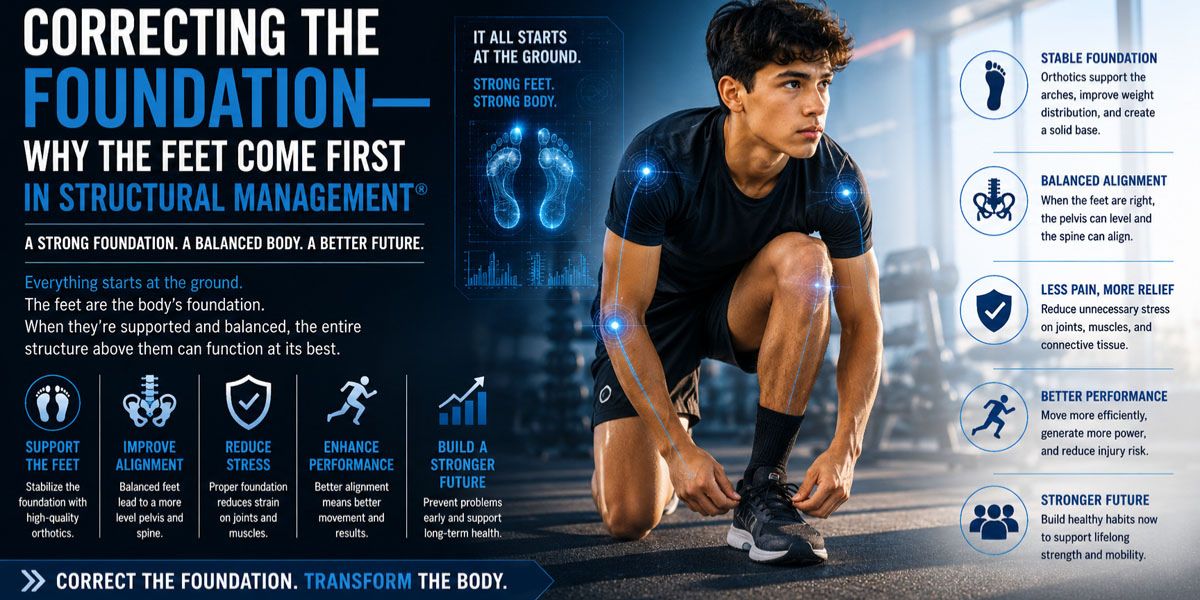
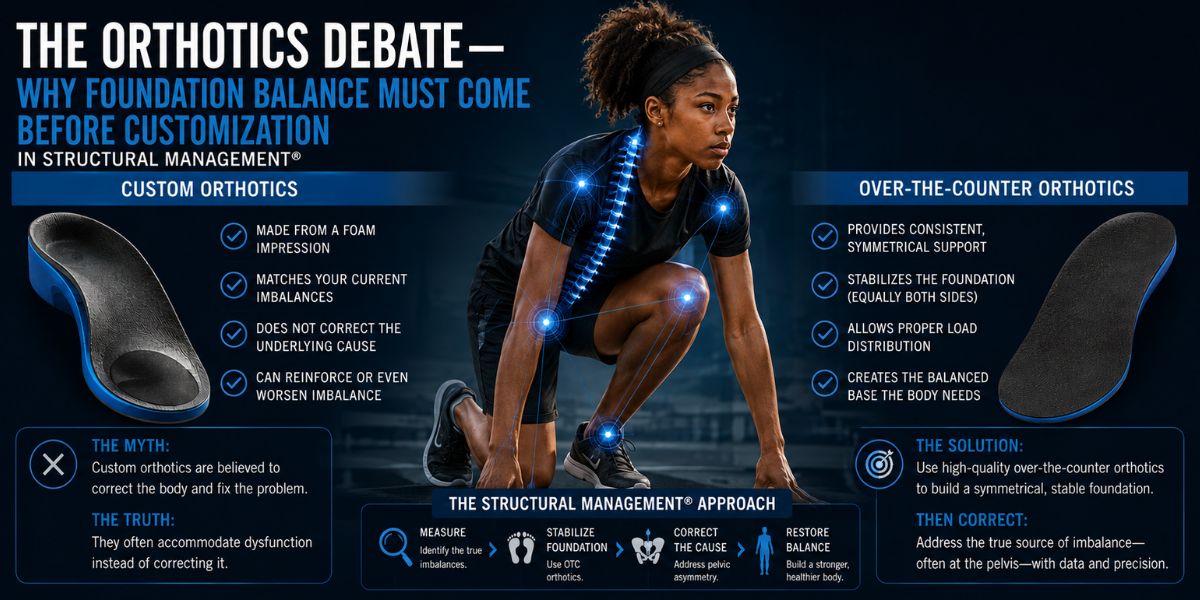
Orthotics are not the enemy. In fact, they are often necessary. When the arches of the feet collapse, support must be introduced to prevent further breakdown, improve load distribution, and create a more stable interaction with the ground. Ignoring the feet is not an option. But believing that correcting the feet is enough—that is where the system breaks down.
Because the ultimate goal is not better feet.
The goal is a balanced body.
And the most important measurable indicator of that balance is not found at the foot. It is found at the pelvis—specifically, in the relationship between the femoral heads. When the femoral heads are level, within a small and acceptable tolerance, the body is in a position to distribute load evenly. When they are not, every step, every movement, and every athletic action is performed on an uneven foundation.
This is where the traditional model falls short.
Orthotics are designed to influence the foot. But the body does not operate in isolated segments. It operates as a chain of interdependent systems. When imbalance exists at the pelvis, it is often the result of long-standing compensation patterns that extend far beyond the feet. These patterns involve the hips, the spine, and the neuromuscular system adapting over time to uneven loading.
Introducing orthotics into this system may improve the function of the feet, but it does not guarantee correction of the pelvis. In many cases, the pelvis remains unlevel. In some, it may improve. In others, it may even worsen. Without measuring femoral head height after orthotics are introduced, there is no way to know which outcome has occurred.
And that is the missing link.
The standard approach stops too early. It identifies a problem at the feet, applies a solution at the feet, and assumes the job is done. But the body does not reward assumptions. It responds to physics.
If the pelvis remains unlevel, the forces traveling through the body remain asymmetrical. Over time, this leads to predictable consequences—uneven joint loading, compensatory muscle tension, altered movement patterns, and ultimately, injury. This is especially critical in athletes, where repetitive stress magnifies even small imbalances.
This is why orthotics alone are not enough.
They address one piece of the problem, but not the entire system.
The real objective is not simply to support the arches. It is to normalize structural balance, and that requires verification at the pelvic level. This is where the concept of femoral head height difference becomes essential. A difference of more than a few millimeters represents a measurable imbalance that will influence how forces are distributed throughout the body.
What we have consistently observed is that a significant percentage of individuals—often the majority—still present with an unlevel pelvis after orthotics are placed into their shoes. In these cases, additional correction is required. This typically comes in the form of a precisely measured lift, applied to the side of the lower femoral head, with the goal of bringing the pelvis into a more level position.
But here is where precision matters.
This is not guesswork. This is not trial and error. And it is certainly not something that can be done effectively without measurement. The only reliable way to determine whether the pelvis is level—and how much correction is needed—is through objective imaging, performed both before and after orthotic intervention.
This is the foundation of the Structural Fingerprint system.
It does not assume. It measures.
It does not generalize. It individualizes.
And it does not stop at the feet. It follows the chain all the way to the pelvis and beyond.
In this system, orthotics are step one—not the final answer. After they are introduced, the body is reassessed. If the femoral heads are level, the system is functioning efficiently. If they are not, the necessary adjustments are made. This may involve adding a lift, modifying the orthotic, or addressing other structural factors that are contributing to the imbalance.
This process transforms orthotics from a static solution into part of a dynamic, data-driven strategy.
And this is where the real impact is seen.
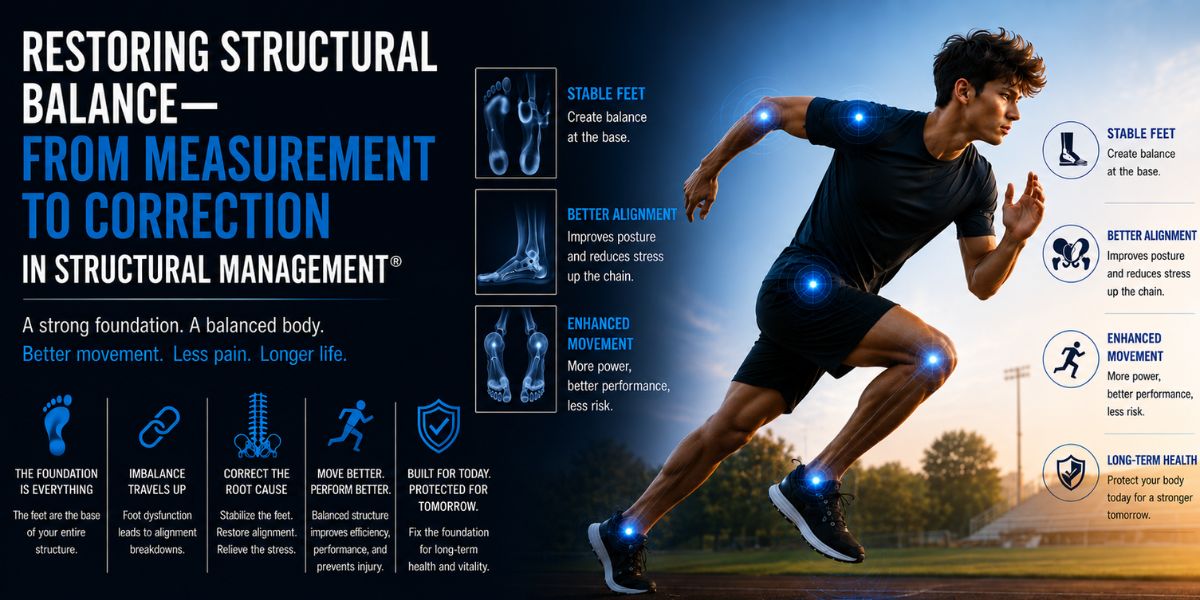
When the pelvis is level, load distribution becomes more symmetrical. The spine is better supported. Muscles are no longer forced to compensate for uneven forces. Movement becomes more efficient. And perhaps most importantly, the risk of injury is significantly reduced.
This is not theory. It is the logical outcome of restoring balance to a system governed by physics.
For young athletes, this has profound implications. These are individuals whose bodies are still developing, still adapting, and often subjected to increasing levels of physical demand. If imbalance is present and uncorrected, it becomes ingrained. Over time, it leads to breakdown—sometimes subtle, sometimes catastrophic.
But if imbalance is identified early, measured accurately, and corrected properly, the trajectory changes.
Instead of compensating, the body develops in balance.
Instead of breaking down, it builds resilience.
Instead of reacting to injury, we begin to prevent it.
This is the shift—from reactive care to proactive structural management.
And it begins by recognizing a simple but powerful truth:
Supporting the feet is important.
But leveling the pelvis is essential.
Until both are addressed—and verified—true structural balance has not been achieved.
All Blog Articles