Blog
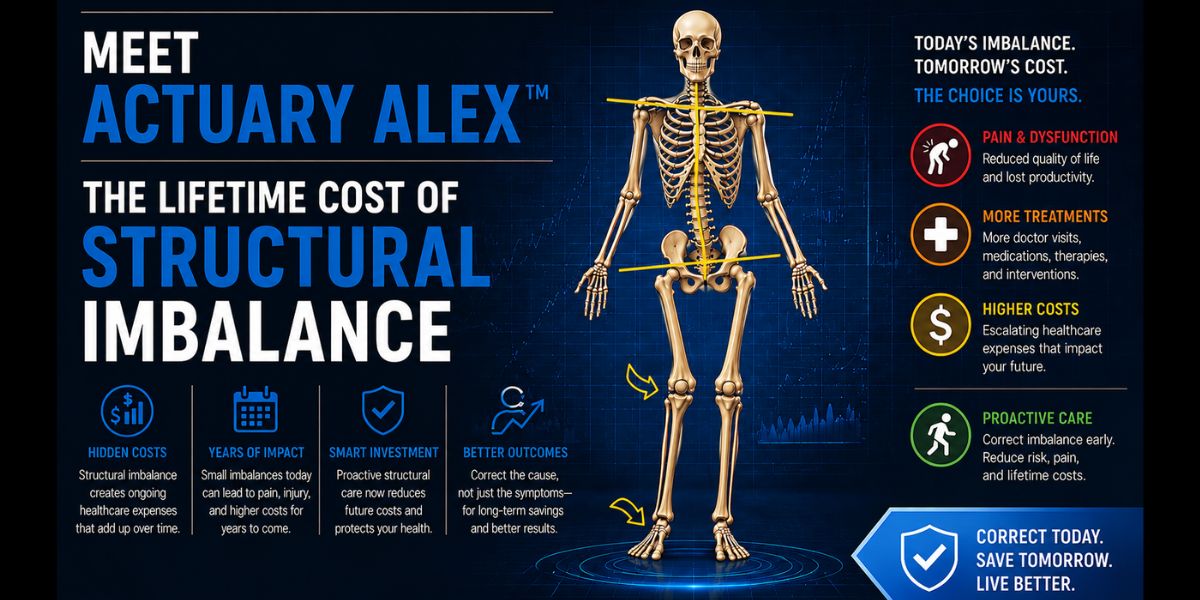
Meet Actuary Alex™ — The Lifetime Cost of Structural Imbalance
Article 13: Meet Actuary Alex™ — The Lifetime Cost of Structural Imbalance
At first glance, Actuary Alex™ appears healthy. Alex may be male or female, young or old, athletic or non-athletic. Alex represents millions of people living productive lives while unknowingly carrying structural imbalances that quietly influence every movement, every step, and every force traveling through the body. One shoulder may sit higher than the other. The pelvis may be unlevel. One knee may collapse inward more than the other. One foot may pronate excessively while the spine compensates in an effort to keep the body upright and functioning. To many, these asymmetries appear minor or even normal. But from the perspective of Structural Management®, they represent something much larger: a lifetime of uneven load distribution.
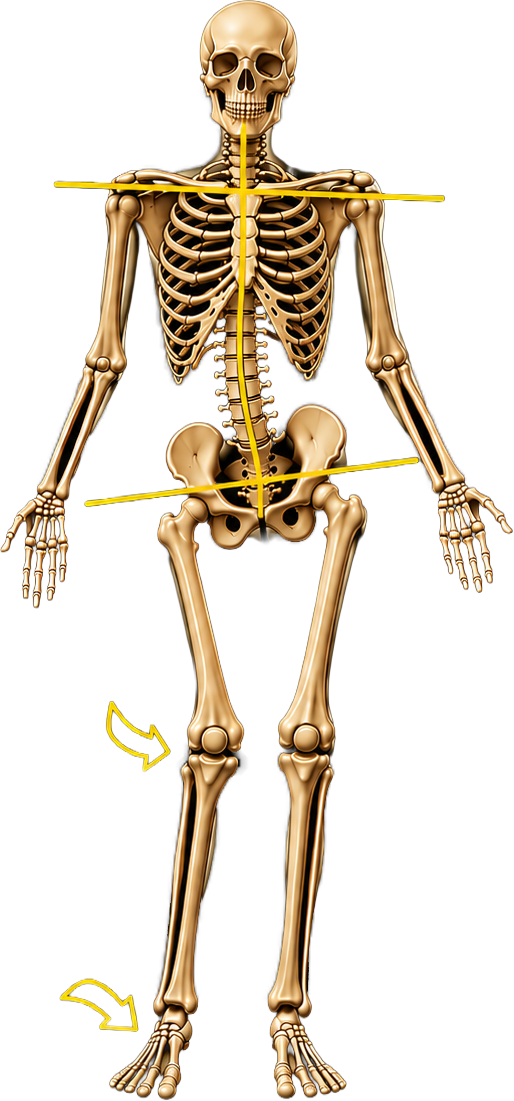
The name “Actuary Alex™” was chosen intentionally. Actuaries specialize in evaluating long-term risk, probabilities, and future consequences. They understand that seemingly small variables, repeated over time, often lead to enormous outcomes later. Structural imbalance works the same way. The body is a load-bearing mechanical system governed by the laws of physics and tissue tolerance. When forces are distributed evenly, tissues function more efficiently and generally remain healthier longer. But when asymmetry exists, certain joints, muscles, tendons, ligaments, and discs are forced to absorb more stress than they were designed to tolerate.
Initially, the body adapts remarkably well. Muscles tighten to stabilize unstable regions. Joints alter their movement patterns. The nervous system creates compensation strategies that allow Alex to continue functioning despite imbalance. In many cases, Alex may remain active, productive, and even athletic for years without obvious symptoms. However, adaptation is not the same as optimal function. Compensation always carries a cost.
Every asymmetrical force creates stress somewhere within the system. Every imbalance increases load concentration on certain tissues. Every altered movement pattern changes how forces travel through the body. Because these abnormal stresses are repeated thousands, and eventually millions, of times over a lifetime, the effects gradually compound. This is where Dr. Maggs® Law of Tissue Tolerance becomes critically important:
When the load applied to a tissue exceeds its capacity, compensatory physiological changes will occur.
Actuary Alex™ represents this principle perfectly. The body compensates continuously, even when pain is absent. The tissues under the greatest stress gradually become the tissues most vulnerable to breakdown. What begins as silent imbalance eventually becomes mechanical wear and degeneration.
The process usually starts subtly. A young athlete develops recurring ankle sprains. A teenager experiences chronic muscle tightness. A college student notices intermittent low back discomfort. An adult develops recurring neck tension or headaches. At this stage, the body is still compensating effectively enough to maintain function, but the imbalance remains and the abnormal loading continues accumulating year after year.
Eventually, the cost becomes greater. The knee exposed to excessive stress begins degenerating unevenly. The lumbar discs lose integrity from chronic asymmetrical compression. The hips deteriorate under uneven loading. The cervical spine stiffens and wears abnormally. Tendons become chronically inflamed. Arthritis develops. What many people describe simply as “getting older” may actually represent decades of structural imbalance gradually overwhelming tissue tolerance.
As the breakdown progresses, the financial costs begin escalating as well. Medical visits increase. Imaging studies become routine. Physical therapy, injections, medications, and specialist referrals accumulate. Many individuals eventually undergo surgeries, including spinal procedures, meniscus repairs, hip replacements, or knee replacements. In severe cases, chronic musculoskeletal problems contribute to long-term disability and loss of independence.
However, the price paid for structural imbalance is not only physical or financial. Chronic pain changes lives emotionally and psychologically. It affects confidence, sleep, productivity, relationships, and overall quality of life. Many individuals slowly stop exercising, withdraw from activities they once loved, and begin organizing their lives around pain avoidance. Emotional stress, frustration, anxiety, and even depression often accompany chronic structural breakdown.
The tragedy is that much of this process develops silently long before meaningful structural evaluation ever occurs. Traditional healthcare often waits until symptoms become severe before aggressively intervening. By the time pain reaches a crisis point, the body may have spent years or decades compensating unsuccessfully.
Actuary Alex™ challenges this reactive model. Alex reminds us that imbalance begins quietly, progresses gradually, and compounds continuously over time. The body does not suddenly “fall apart.” It slowly accumulates the effects of asymmetrical loading throughout life.
This is why proactive structural evaluation is so important. The Structural Fingerprint® Exam was designed to identify these patterns early, before compensation progresses into irreversible degeneration. Through standing weight-bearing imaging, foot evaluation, pelvic analysis, and structural measurement, asymmetries can be identified objectively rather than waiting for tissues to fail.
Once imbalance is identified, the process of correction can begin. Stabilizing the foundation, improving load distribution, leveling the pelvis, and reducing excessive tissue stress become essential goals within Structural Management®. The objective is not perfection. The objective is reducing abnormal stress so tissues can function within healthier tolerances for as long as possible.
This becomes especially important in youth athletes. When imbalance is identified early, compensation patterns may be reduced before decades of repetitive loading create long-term damage. Preventive biomechanics may ultimately become one of the most important healthcare opportunities of the future.
Actuary Alex™ also changes how we think about healthcare economics. What if many chronic musculoskeletal conditions are not simply unavoidable consequences of aging, but rather the long-term result of unmanaged structural imbalance? What if earlier identification and correction of asymmetrical loading could significantly reduce future healthcare costs, surgeries, disability, and suffering?
These questions may ultimately reshape the future of musculoskeletal healthcare.
Because in the end, Actuary Alex™ teaches a simple but powerful lesson: the body always keeps score. Every imbalance creates stress. Every asymmetrical load leaves an effect. Every compensation eventually demands payment. And over a lifetime, the price paid for structural imbalance can become enormous.
All Blog Articles