Blog

Structural Management® vs. Traditional Chiropractic—Why Precision, Measurement, and Systemization Matter
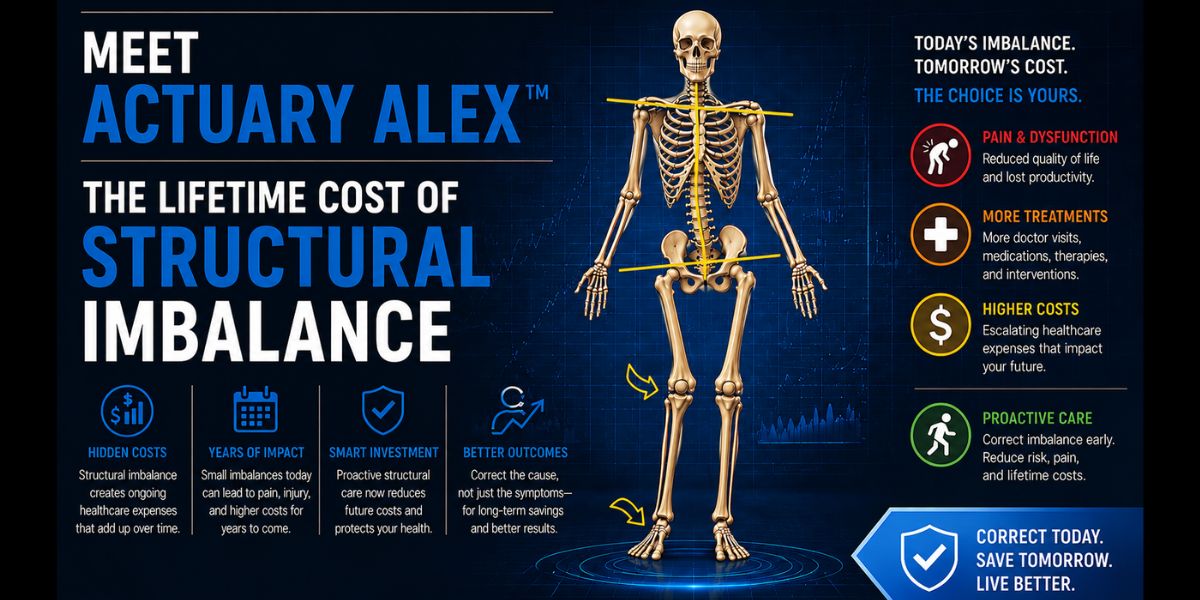
Chiropractic care has played an important and valuable role in musculoskeletal health for over a century, helping millions of people reduce pain, improve mobility, and restore function. At its core, chiropractic is built on a powerful and valid premise: structure affects function. This foundational concept aligns closely with the principles of Structural Management®, which also recognizes that the alignment and organization of the human body directly influence how it performs and how it breaks down. However, while chiropractic introduced this critical idea to healthcare, its application across the profession has been inconsistent, and in many cases, incomplete. As a result, chiropractic as a whole has not achieved the level of precision, predictability, or large-scale cost reduction that is now possible through a more advanced, measurement-driven approach.
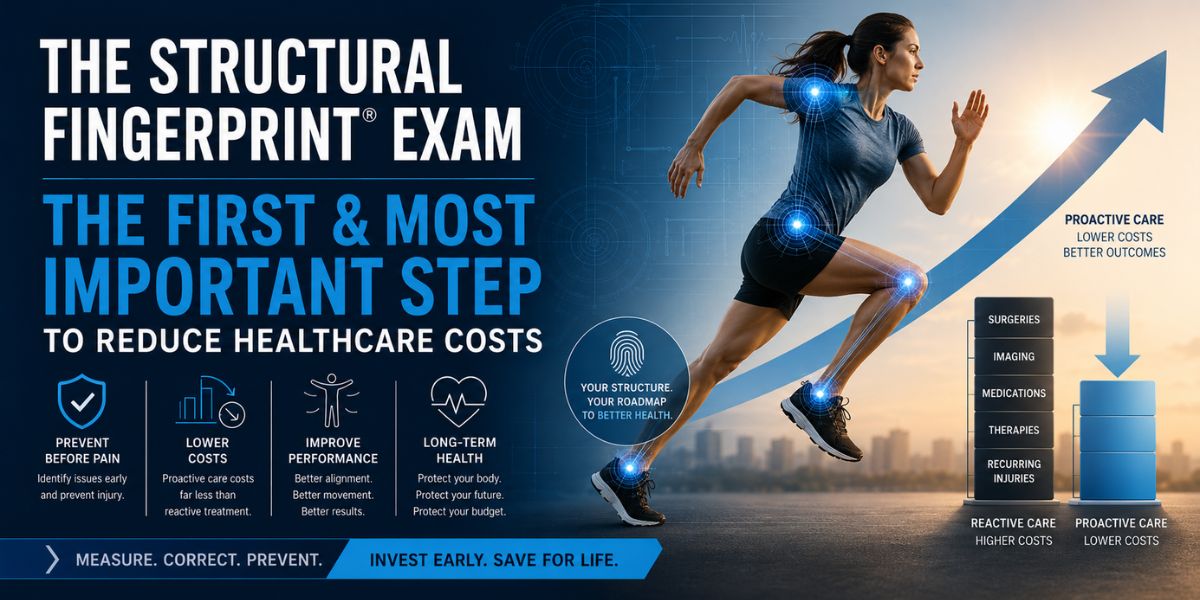
One of the most significant differences between traditional chiropractic care and Structural Management® lies in the role of objective measurement. In engineering, no system is adjusted without first being measured. Precision is not optional—it is the foundation of effective intervention. Yet within chiropractic, many practitioners rely on subjective methods such as palpation, visual posture analysis, and patient-reported symptoms to guide care. While these tools have value, they lack the consistency and repeatability required to fully understand a complex mechanical system like the human body. The Structural Fingerprint® Exam changes this standard by introducing quantifiable, weight-bearing measurements that reveal how the body is functioning under real-world conditions. By identifying asymmetries, load imbalances, and deviations beyond structural tolerance, it replaces estimation with data and allows for targeted, individualized correction.
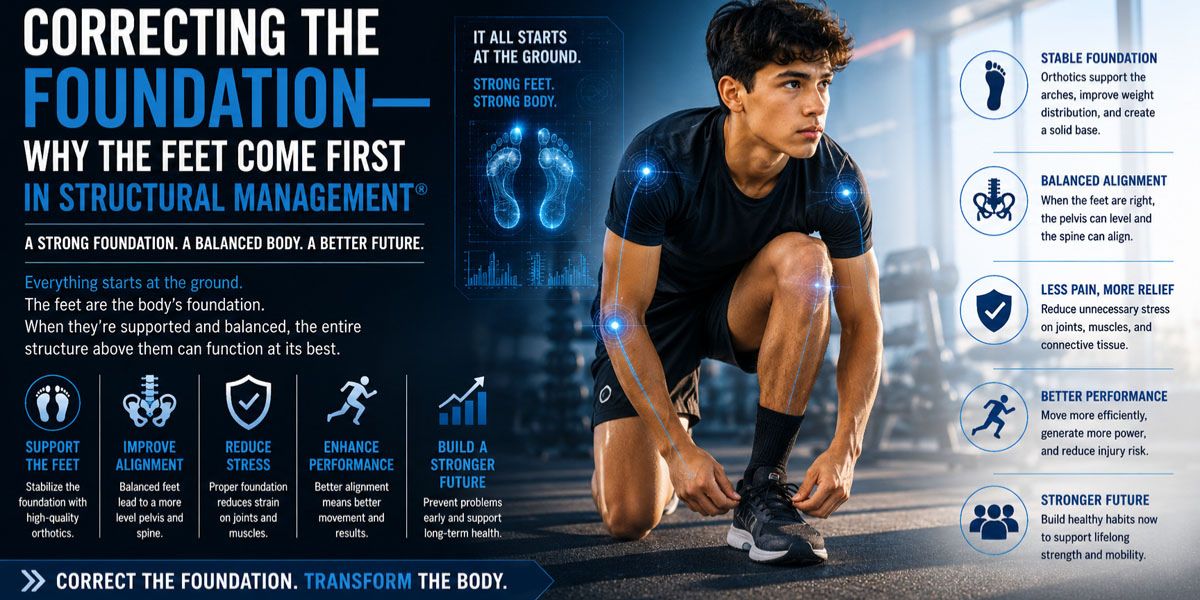
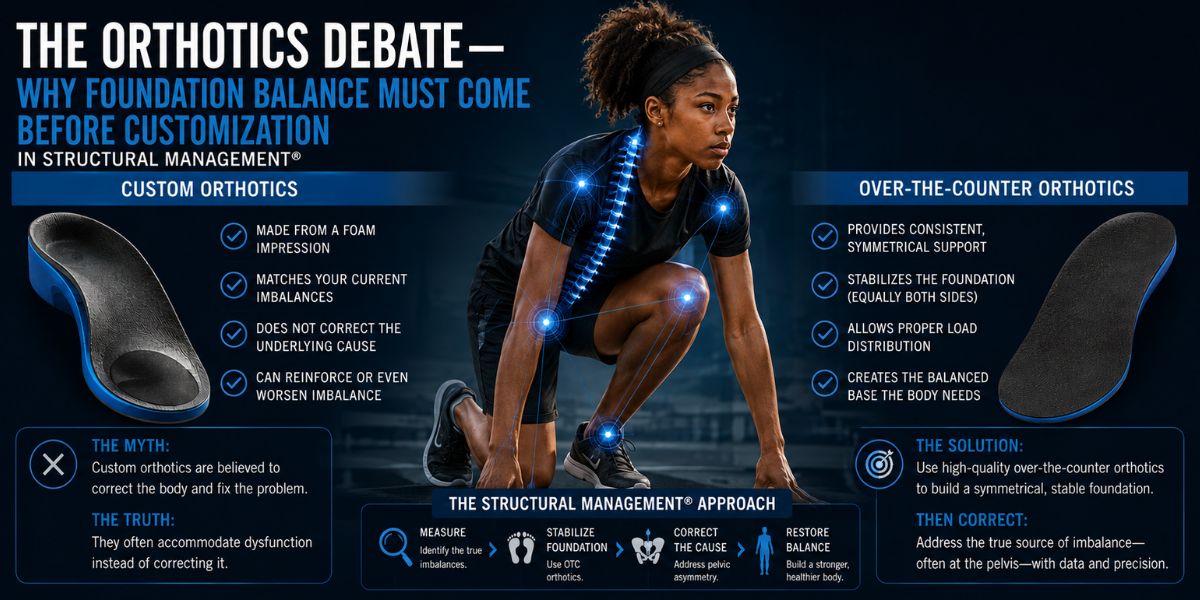
Another critical distinction is the emphasis on the foundation of the body. Traditional chiropractic care has historically focused on the spine as the central structure of concern, often approaching correction from the top down. While spinal alignment is unquestionably important, this approach can overlook the role of the feet as the foundation of the entire kinetic chain. Structural Management® begins where all load-bearing systems must begin—at the base. By stabilizing the feet and correcting asymmetries at the foundation, it creates the conditions necessary for true and lasting alignment throughout the rest of the body. Without this step, even well-executed spinal corrections may be temporary, as the underlying forces driving imbalance remain unchanged.
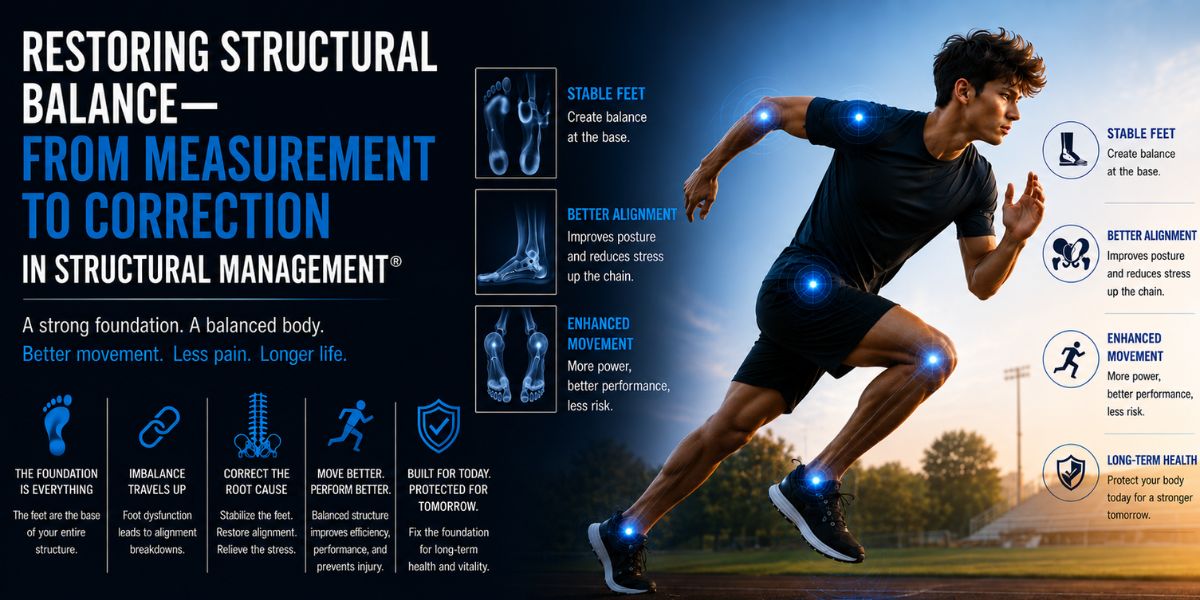
In addition to differences in measurement and foundational focus, Structural Management® distinguishes itself through a fully integrated, system-wide approach. The human body does not function in isolated segments; it operates as an interconnected mechanical system where changes in one area affect every other. While chiropractic care often addresses specific regions of pain or dysfunction, Structural Management® evaluates and corrects the entire system in a defined sequence—beginning with measurement, followed by foundation stabilization, pelvic balancing, spinal alignment, and functional integration. This sequencing is critical, as correcting one part of the system without addressing another can lead to incomplete or short-lived results.
A further limitation of traditional chiropractic care is its frequent reliance on a symptom-driven model. Many patients seek chiropractic treatment only after pain or injury has occurred, and care often concludes once those symptoms are reduced. While this approach can provide meaningful relief, it does not always address the underlying structural cause, nor does it prevent future recurrence. Structural Management® shifts this paradigm by emphasizing proactive care. Through the Structural Fingerprint® Exam, structural inefficiencies can be identified before they produce symptoms, allowing for early intervention that reduces injury risk, improves performance, and minimizes long-term degeneration. This proactive model aligns more closely with the principles of engineering and preventive healthcare, where the goal is not simply to fix problems, but to prevent them from occurring.
From an economic perspective, these differences are highly significant. While chiropractic care has demonstrated the ability to reduce certain healthcare costs—such as lowering reliance on medications or decreasing the need for some surgical procedures—these benefits have not been consistently realized across the broader healthcare system. This inconsistency is largely due to variability in practice methods, lack of standardization, and the absence of a universally applied measurement framework. Structural Management®, by contrast, offers a more scalable solution. By standardizing the process of measurement, correction, and follow-up, it reduces inefficiencies, minimizes trial-and-error care, and ensures that interventions are both targeted and effective. Over time, this leads to fewer repeated treatments, reduced need for advanced interventions, and a more efficient use of healthcare resources.
It is important to recognize that Structural Management® is not positioned in opposition to chiropractic, but rather as an evolution of its foundational principles. Chiropractic introduced the idea that structure matters. Structural Management® builds upon that idea by adding the elements necessary for precision and scalability: objective measurement, foundation-first correction, system-wide integration, and continuous feedback. In this sense, it represents the next stage in the progression of musculoskeletal care, aligning clinical practice with the proven methodologies of engineering and systems analysis.
Ultimately, the distinction between traditional chiropractic care and Structural Management® is not one of philosophy, but of execution. Both recognize the importance of structure, but only one consistently measures it, corrects it in a defined sequence, and tracks it over time. In a healthcare environment increasingly focused on outcomes, efficiency, and cost control, this difference is critical. By replacing subjectivity with data and reaction with prevention, Structural Management® offers a path forward—one that not only improves patient outcomes, but also has the potential to significantly reduce the financial burden of musculoskeletal care on society.
As healthcare continues to evolve, the need for more precise, proactive, and system-based approaches will only grow. Structural Management® answers that need by bringing clarity, consistency, and accountability to the care of the human body. It demonstrates that when structure is measured accurately and corrected systematically, better outcomes are not only possible—they become predictable.
All Blog Articles