Blog

The Structural Fingerprint® Exam—The First and Most Important Step to Reduce Healthcare Costs
Healthcare costs continue to rise at an unsustainable rate, driven in large part by the growing burden of musculoskeletal conditions such as back pain, joint degeneration, tendon injuries, and chronic dysfunction. Despite the billions of dollars spent annually on treatment, outcomes often remain inconsistent, recurrence rates are high, and long-term resolution is far from guaranteed. The core issue is not a lack of treatment options, but rather a systemic failure to identify and address structural problems early. The healthcare system, as it currently operates, is largely reactive—intervening only after symptoms appear—rather than proactive in preventing those symptoms from developing in the first place.
If we accept the premise established in the earlier articles of this series—that the human body functions as a mechanical system governed by the same principles as engineered structures—then it becomes clear that structural inefficiencies, asymmetries, and imbalances are primary drivers of both injury and long-term healthcare utilization. However, in most cases, these structural issues go undetected until they manifest as pain or dysfunction. By that point, the cost—both financially and physically—has already begun to accumulate.
The Structural Fingerprint® Exam represents a fundamentally different approach. It introduces objective, measurable analysis at the earliest possible stage, allowing for the identification of structural deviations before they evolve into costly clinical problems. In doing so, it shifts the entire paradigm of care from reactive treatment to proactive prevention, making it not only a clinical advancement, but a powerful tool for reducing healthcare costs.
Traditional healthcare often follows a predictable and costly cycle. A patient experiences pain or injury, seeks treatment, experiences some level of relief, returns to activity, and eventually experiences recurrence. Each cycle generates additional costs, yet the underlying structural cause frequently remains unaddressed. A patient with chronic knee pain, for example, may receive therapy, injections, or even surgery, while the true source of the problem—a foot imbalance or pelvic asymmetry—continues to exist. Similarly, recurring low back pain may be treated repeatedly without correcting the fundamental issue of uneven load distribution. Over time, this cycle escalates, leading to more advanced imaging, specialist consultations, medications, and surgical interventions, each adding to the overall cost without necessarily delivering lasting resolution.
From an engineering perspective, failures are rarely random; they are the predictable result of structural inefficiencies, excessive load, or repeated stress beyond a system’s tolerance. The same holds true for the human body. When structure is compromised, load is distributed unevenly, certain tissues are overloaded, compensation patterns develop, and fatigue accelerates. These processes often begin long before symptoms appear, progressing silently until the system can no longer compensate. The Structural Fingerprint® Exam identifies these issues early, providing an opportunity to intervene before they become expensive problems.
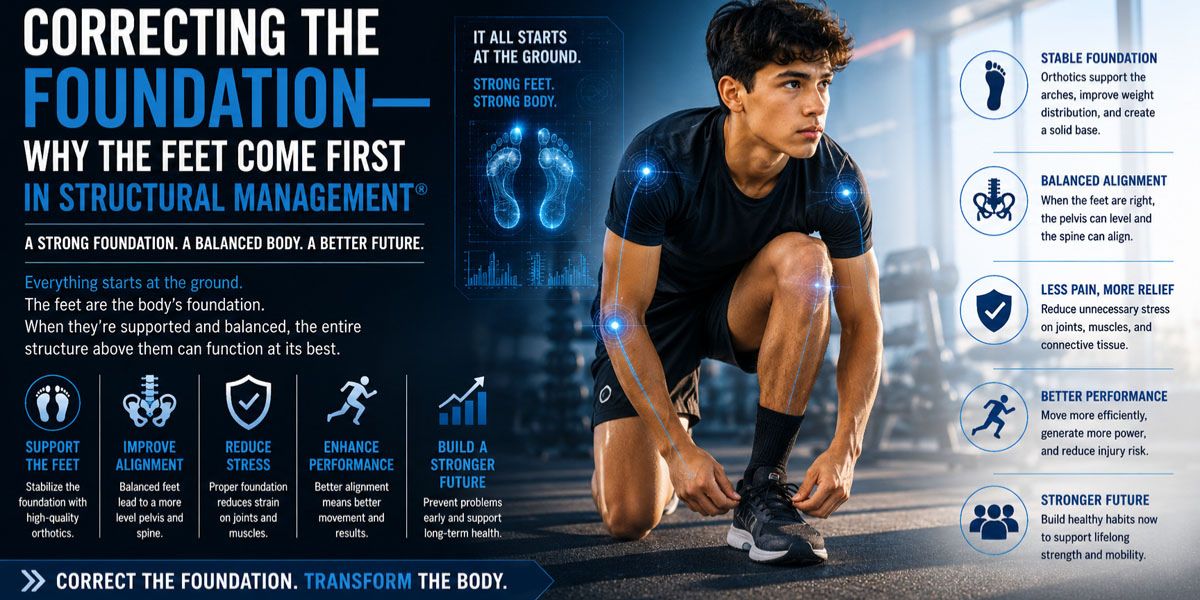
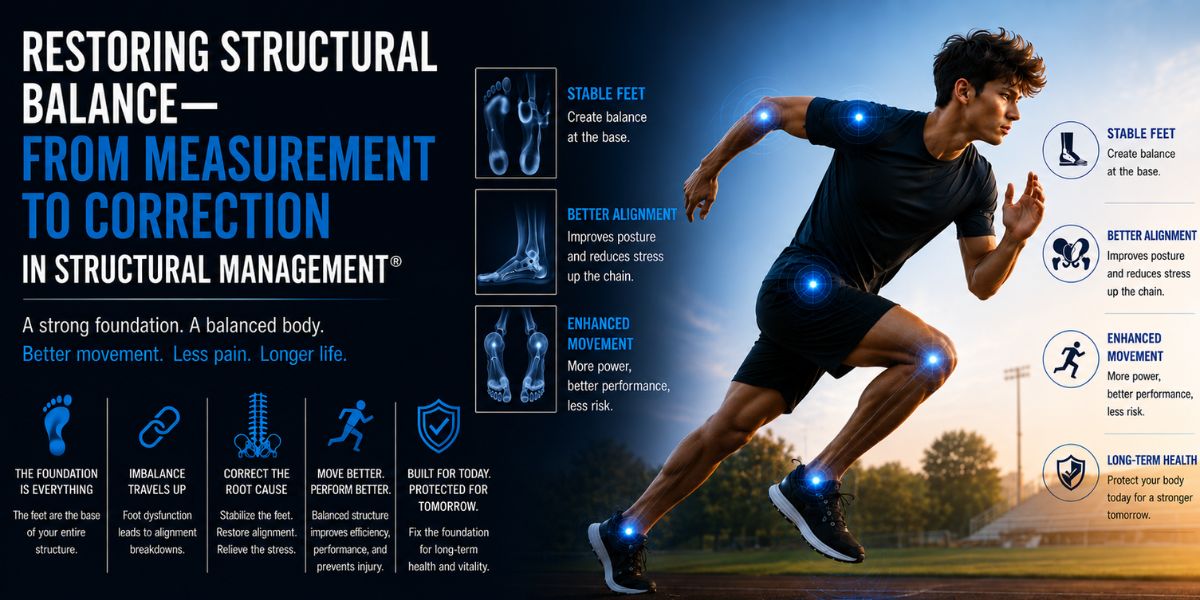
Early detection is one of the most effective strategies for reducing healthcare costs across all areas of medicine, and its value is particularly evident in musculoskeletal care. By identifying asymmetries, load imbalances, and deviations beyond structural tolerance, the Structural Fingerprint® Exam enables targeted, early intervention. These interventions are typically non-invasive and cost-effective, such as stabilizing the foundation with orthotic support, making minor structural corrections, or implementing targeted movement strategies. When compared to the cost of chronic care, repeated treatments, or surgical procedures, these early interventions represent a fraction of the expense.
The economic value of this approach becomes even more compelling when viewed over time. Correcting structural issues early reduces injury risk, improves efficiency of movement, and slows degenerative processes. This, in turn, decreases the likelihood of future medical interventions, including imaging, medications, and surgery. The result is a compounding effect, where the initial investment in structural assessment and correction yields ongoing savings throughout an individual’s life. Fewer doctor visits, fewer procedures, and fewer lost days due to injury all contribute to a more efficient and sustainable model of care.
The potential return on investment is particularly significant in youth athletes. During periods of growth and development, structural patterns are still forming, and compensation patterns have not yet become deeply ingrained. At the same time, youth sports are becoming increasingly intense, leading to a rise in overuse injuries at younger ages. The Structural Fingerprint® Exam provides a unique opportunity to identify and correct imbalances early, preventing injuries before they occur and optimizing performance in a safe and sustainable way. From a cost perspective, preventing even a single major injury—or avoiding a future surgical procedure—can offset the cost of early assessment many times over.
Another critical factor in reducing healthcare costs is eliminating inefficiency. A significant portion of healthcare spending is attributed to treatments that fail to address the true source of a problem, resulting in prolonged care and repeated interventions. The Structural Fingerprint® Exam reduces this inefficiency by providing objective data that guides precise, targeted care. Instead of focusing solely on where the patient feels pain, it identifies where the structure is compromised. This shift leads to more accurate diagnosis, more effective treatment, and faster resolution, ultimately reducing the need for trial-and-error approaches that drive up costs.
In addition, the Structural Fingerprint® Exam incorporates a feedback-driven model of care. Follow-up measurements allow practitioners to track progress objectively, ensuring that interventions are producing measurable improvements. This continuous evaluation mirrors the feedback loops used in engineering systems, where performance is monitored and adjustments are made to maintain efficiency and reliability. In healthcare, this level of accountability ensures that resources are used effectively and that care is consistently aligned with measurable outcomes.
Efforts to reduce healthcare costs often focus on external factors such as pricing, policy changes, or limiting access to services. While these approaches may provide temporary relief, they do not address the underlying drivers of cost. The Structural Fingerprint® Exam offers a more fundamental solution by targeting the root cause of many musculoskeletal problems: structural inefficiency. By identifying and correcting these issues early, it reduces the need for more expensive interventions later.
Ultimately, the Structural Fingerprint® Exam is more than a diagnostic tool—it is a strategic approach to healthcare cost reduction. It addresses problems before they escalate, replaces guesswork with objective data, and aligns care with the principles of efficiency and prevention. By shifting the focus from reactive treatment to proactive structural optimization, it not only reduces financial costs but also improves patient outcomes, enhances performance, and supports long-term health.
In this way, the Structural Fingerprint® Exam stands as the first and most important step in creating a more effective, efficient, and sustainable healthcare model—one where better structure leads to better outcomes, and better outcomes lead to lower costs.
All Blog Articles