Blog

Dr. Maggs® Law of Tissue Tolerance — The Price Paid for Imbalance
One of the most important concepts in both engineering and human biomechanics is the principle of tolerance. Every material, every structure, and every system has limits. When forces remain within those limits, the structure functions efficiently and predictably. But when those limits are exceeded—especially repeatedly over time—breakdown becomes inevitable. This principle governs bridges, machines, aircraft, and skyscrapers. It also governs the human body.
From this understanding emerged what has become a foundational principle within Structural Management®:
Dr. Maggs® Law of Tissue Tolerance:
When the load applied to a tissue exceeds its capacity, compensatory physiological changes will occur.
This law is simple in wording, but profound in implication. It explains why tissues break down, why injuries develop, why compensation patterns form, and why so many musculoskeletal problems continue recurring despite treatment. More importantly, it reframes injury not as a random event, but as the predictable consequence of imbalance and excessive stress over time.
For decades, many musculoskeletal conditions have been treated primarily through a symptom-based lens. Pain appears, inflammation develops, movement becomes restricted, and intervention is directed toward the area of discomfort. While this approach may temporarily reduce symptoms, it often fails to answer the most important question:
Why did the tissue fail in the first place?
From a Structural Management® perspective, tissues rarely fail randomly. They fail because the loads placed upon them exceeded their ability to tolerate those loads. Sometimes the overload is sudden and traumatic, but more commonly it is repetitive, gradual, and cumulative. The body compensates for structural imbalance for as long as it can—until eventually the tissue reaches its limit.
This process closely mirrors the engineering principle of fatigue failure. In engineering, a material does not need to experience one catastrophic force to break. Repeated smaller stresses, applied over enough cycles, will eventually create microscopic damage that accumulates until structural failure occurs. Importantly, the load itself may not appear extreme. The problem is repetition combined with imbalance.
The human body behaves in exactly the same way.
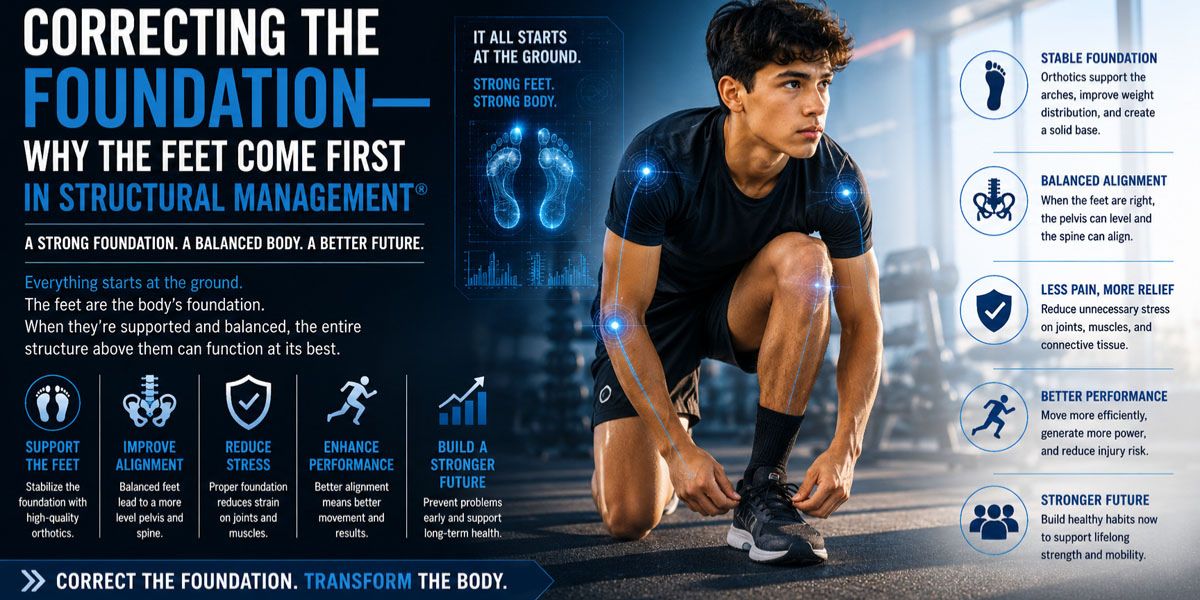
Every step taken, every jump landed, every athletic movement performed places forces into the body. Under ideal conditions, those forces are distributed evenly across joints, muscles, ligaments, and discs. However, when asymmetry exists—whether from foot collapse, pelvic imbalance, spinal misalignment, or compensation patterns—certain tissues are forced to absorb more stress than they were designed to handle.
At first, the body adapts. Muscles tighten to stabilize unstable regions. Joints alter movement patterns. Tendons absorb forces unevenly. The nervous system changes recruitment strategies to maintain function. These compensations are not signs of health; they are signs of survival. The body is attempting to continue functioning despite structural inefficiency.
Eventually, however, compensation has a cost.
A tendon repeatedly overloaded beyond its tolerance becomes tendinitis. A disc subjected to chronic asymmetrical compression degenerates. A stress fracture develops not because of one bad step, but because the same abnormal force was repeated thousands of times. The body pays a price for imbalance.
This is why symptoms so often appear far from the true source of dysfunction. The tissue that hurts is frequently not the origin of the problem, but rather the tissue that finally exceeded its tolerance. A patient with chronic knee pain may actually have foundational instability in the feet. A young athlete with recurring hamstring strains may have an underlying pelvic imbalance altering load distribution through the entire kinetic chain. Treating only the symptomatic tissue without correcting the structural imbalance driving the overload is comparable to repairing a crack in a bridge while ignoring the unstable support beneath it.
Dr. Maggs® Law of Tissue Tolerance shifts the focus from symptoms to stress distribution. Instead of asking only, “Where does it hurt?” Structural Management® asks, “Why is this tissue overloaded?” That question changes everything.
It changes diagnosis because it forces practitioners to evaluate the body as a complete mechanical system rather than isolated parts. It changes treatment because the goal is no longer merely reducing pain, but restoring balance and reducing excessive load. And it changes prevention because it recognizes that tissues can often be protected before breakdown occurs.
This principle is especially important in athletes. Athletic performance magnifies force. Running, cutting, jumping, and repetitive training expose tissues to enormous mechanical demands. When an athlete is structurally balanced, those forces are distributed efficiently and tolerated more effectively. But when imbalance exists, even small asymmetries become amplified through repetition and intensity.
This helps explain why some athletes remain remarkably durable while others experience repeated injuries despite excellent conditioning and training. It is not always about strength, flexibility, or toughness. Often, it is about load distribution and tissue tolerance. The stronger the imbalance, the greater the stress concentration placed upon specific tissues, and the more quickly those tissues approach failure.
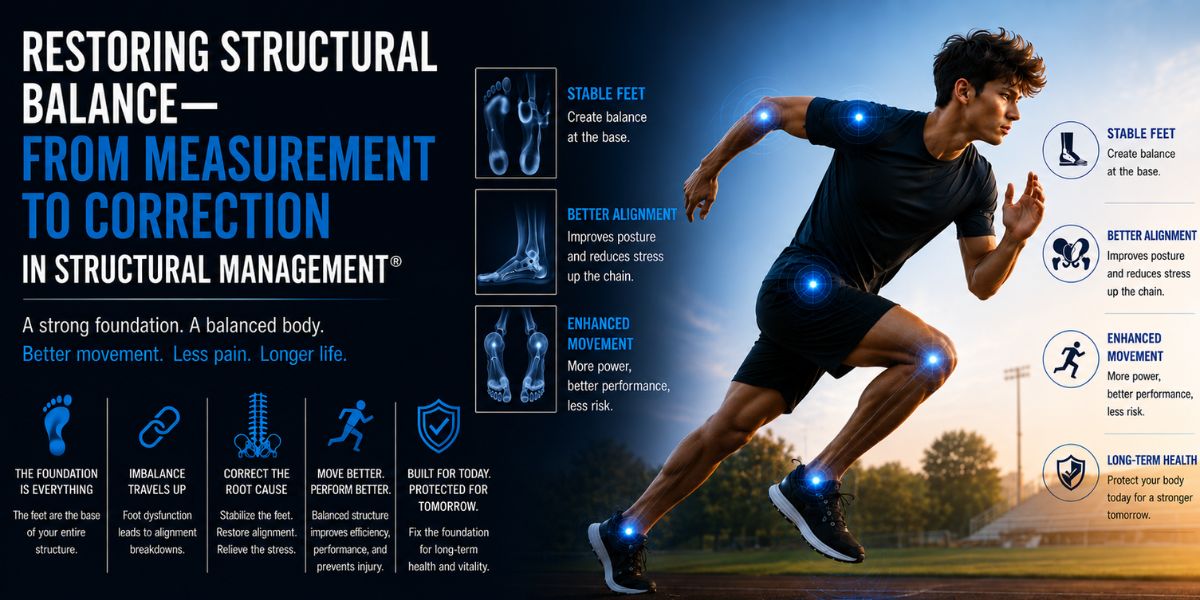
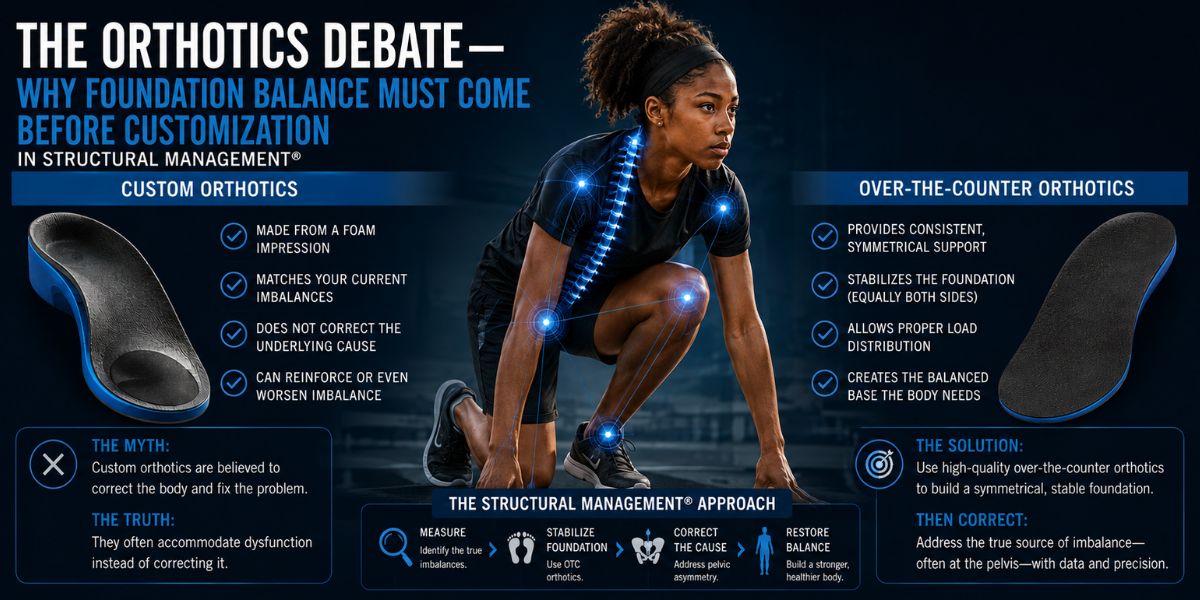
The Structural Fingerprint® Exam was developed in large part to identify these stress-producing imbalances before injury occurs. By measuring foot collapse, femoral head height differences, spinal alignment, and overall structural asymmetry, the exam reveals where the body may be distributing load inefficiently. Structural Management® then applies corrective strategies designed to reduce those asymmetrical forces and restore balance to the system.
This is where prevention becomes possible.
If imbalance increases tissue stress, then correcting imbalance should reduce tissue stress. Reduced stress means tissues operate within more normal tolerances. And when tissues remain within their tolerances, the likelihood of breakdown decreases dramatically.
This concept also has major implications beyond athletics. Degenerative arthritis, disc disease, chronic tendon disorders, and repetitive strain injuries may all be viewed, at least in part, through the lens of tissue tolerance. The body does not simply “wear out” randomly with age. It wears out according to how forces are distributed through it over time. Areas exposed to chronic overload deteriorate faster. Areas functioning within balanced tolerances tend to remain healthier longer.
Ultimately, Dr. Maggs® Law of Tissue Tolerance provides a unifying explanation for many of the chronic musculoskeletal problems seen throughout healthcare. It connects engineering principles with biomechanics, structure with function, and imbalance with breakdown. Most importantly, it offers a pathway forward.
Because if tissues fail when load exceeds tolerance, then healthcare must become more focused on measuring and reducing excessive load before damage occurs.
That is the true purpose of Structural Management®.
Not simply to treat pain.
Not simply to improve posture.
But to restore balance to the human structure so that tissues can function within their natural tolerances for as long as possible.
Because the price paid for imbalance is always the same:
Eventually, the body breaks down.
All Blog Articles