Blog

Why CPOYA® Is Critically Important and Ahead of Its Time
For decades, youth sports were viewed primarily as recreation. Children played multiple sports seasonally, practices were limited, and athletic participation was balanced with recovery, free play, and normal physical development. Today, that landscape has changed dramatically. Youth athletics has evolved into an increasingly year-round, high-pressure environment where specialization begins earlier, training intensity continues to rise, and young athletes are often exposed to repetitive stress levels once reserved for elite adults.
At the same time, rates of overuse injuries, chronic pain, stress fractures, ligament injuries, and early degeneration in young athletes have increased significantly. This raises an important question:
Are we preparing young athletes structurally for the demands we are placing upon them?
That question sits at the heart of why CPOYA®—Concerned Parents of Young Athletes®—is so critically important and, in many ways, far ahead of its time.
CPOYA® was founded on a simple but profound realization: modern youth sports has become increasingly advanced, yet the structural evaluation of the athletes themselves has not kept pace. Young athletes are routinely screened for concussions, cardiac abnormalities, hydration status, strength, and conditioning, yet very few are ever evaluated for the one factor that may influence every movement they make:
Their structural biomechanics.
The modern athlete is often treated as though performance alone determines durability. If they are strong, conditioned, skilled, and pain-free, they are assumed to be healthy. But within Structural Management®, pain is not viewed as the beginning of dysfunction—it is often the end result of years of compensation and excessive tissue stress.
This distinction is critical in youth athletes because their bodies are still developing. Growth plates remain open. Structural patterns are still forming. Compensation strategies become ingrained over time. If imbalance exists during these developmental years, the body adapts around it, and those adaptations may eventually lead to breakdown under repetitive athletic load.
This is why CPOYA® is fundamentally different from many traditional youth sports initiatives. It is not simply about treating injuries after they occur. It is about identifying the structural factors that may contribute to injury before breakdown happens.
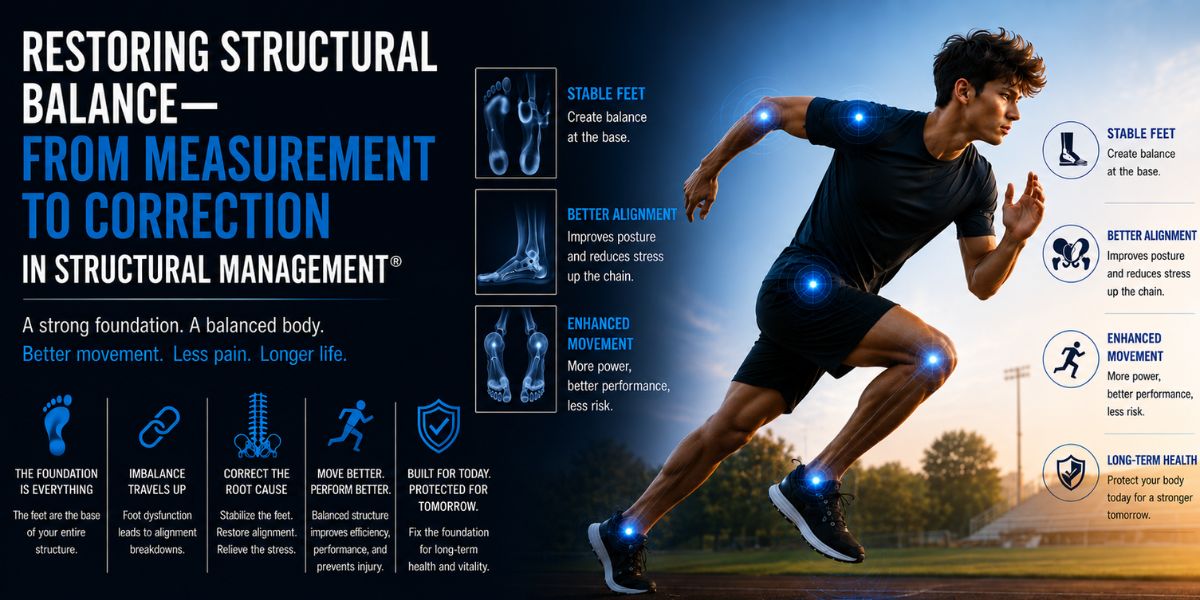
At the center of this approach is the Structural Fingerprint® Exam. Through objective measurement—including foot evaluation, standing biomechanical imaging, femoral head height analysis, and structural assessment—the exam identifies asymmetries and load imbalances that may otherwise go unnoticed. These findings are especially important because youth athletes often compensate remarkably well. They may continue performing at a high level despite significant structural imbalance, creating the illusion of health while excessive stress accumulates silently within the system.
This is where Dr. Maggs® Law of Tissue Tolerance becomes highly relevant. When repetitive forces exceed the capacity of tissues to tolerate them, compensatory physiological changes occur. In youth athletes, the combination of rapid growth, repetitive training, and structural imbalance creates a perfect environment for tissue overload. Tendinitis, stress fractures, chronic joint irritation, and repetitive strain injuries are often not isolated events—they are the predictable consequences of asymmetrical loading repeated over time.
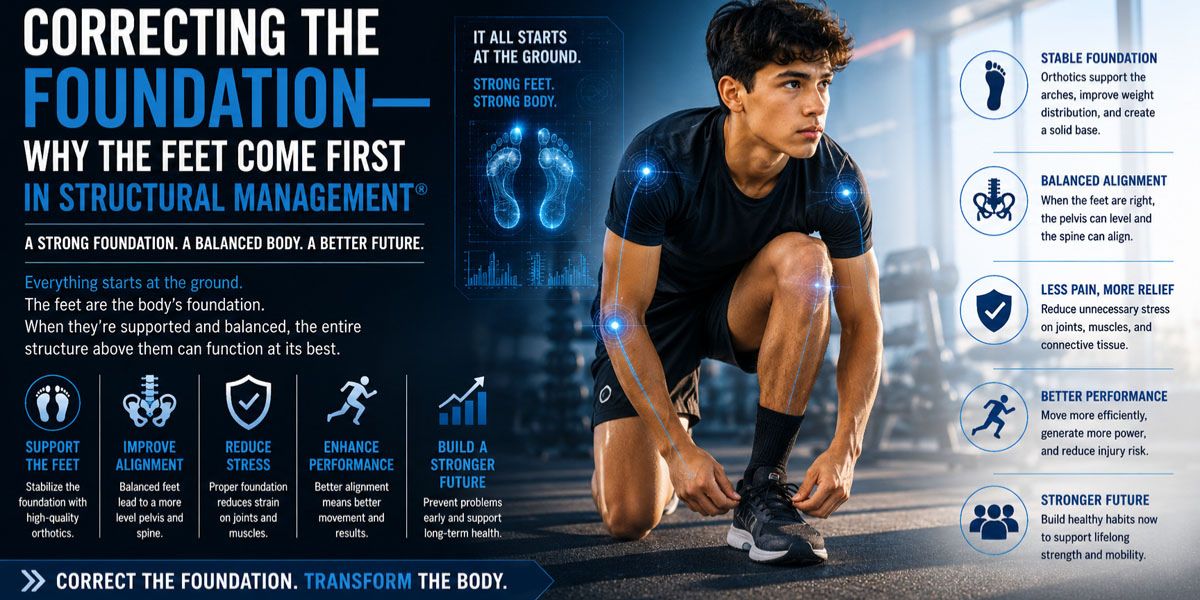
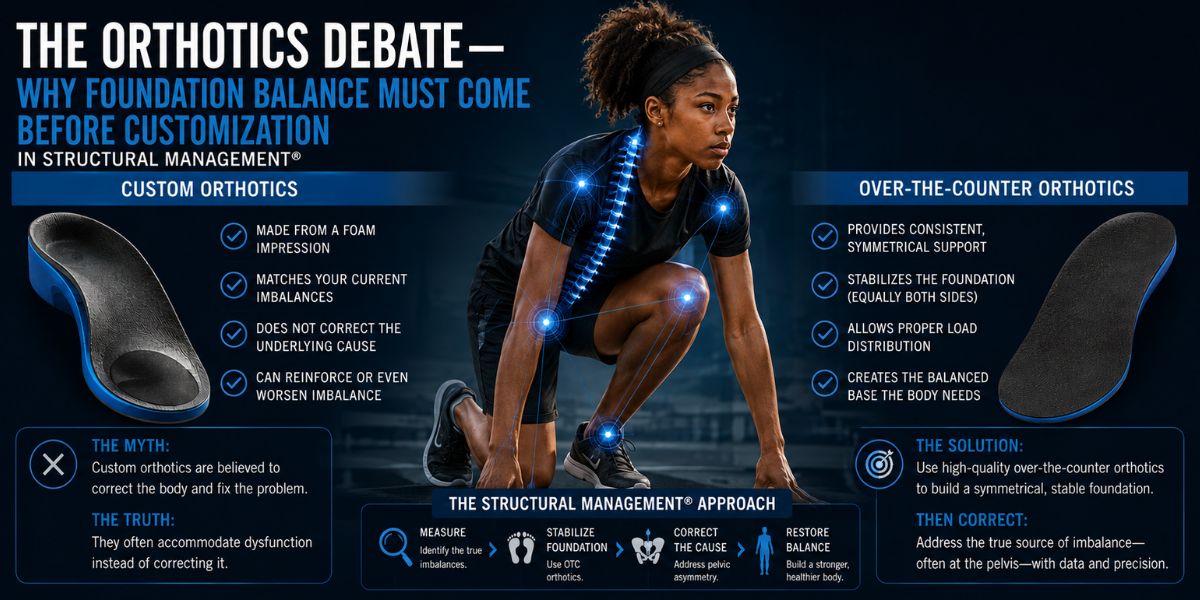
CPOYA® addresses this problem proactively. Rather than waiting for pain, the system seeks to identify imbalance early, stabilize the foundation through proper orthotic support when necessary, level the pelvis when asymmetry remains, and improve overall load distribution throughout the body. The objective is not merely symptom relief, but structural efficiency and long-term durability.
What makes this approach especially ahead of its time is that it aligns closely with principles already accepted in engineering, performance science, and preventive healthcare, yet remains uncommon within youth athletics. In engineering, no responsible designer would knowingly place repeated stress through an imbalanced structure and expect long-term durability. In professional sports, load management and performance analytics have become central priorities. Yet many youth athletes still train and compete intensely without ever undergoing meaningful biomechanical evaluation.
CPOYA® fills that gap.
It recognizes that youth athletes are not simply smaller adults. They are rapidly adapting systems exposed to increasing physical demands during critical developmental periods. If imbalance is ignored during these years, the consequences may extend far beyond youth sports. Chronic knee problems, spinal degeneration, hip dysfunction, repetitive injuries, and movement inefficiencies often begin long before adulthood. By the time symptoms appear later in life, the compensation patterns have often been present for years.
This is why early structural intervention may be one of the most important opportunities in modern healthcare. The earlier imbalance is identified, the more adaptable the body remains and the greater the potential for correction before chronic breakdown occurs. In this sense, CPOYA® is not just a sports initiative—it is a long-term health initiative.
It is also a shift in philosophy. Traditional sports medicine has often focused on rehabilitation after injury. CPOYA® emphasizes preservation before injury. It asks a fundamentally different question:
Instead of asking how we treat injuries better, why aren’t we doing more to prevent them structurally in the first place?
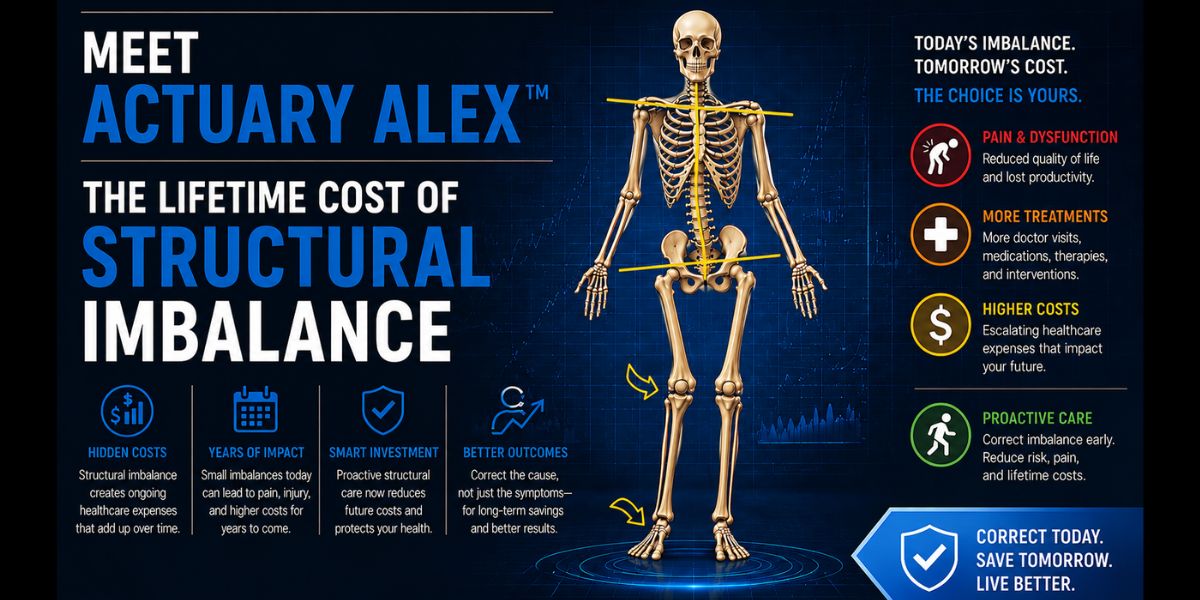
This proactive perspective has major implications not only for athletes and families, but also for healthcare systems, schools, coaches, and insurers. If structural imbalance contributes significantly to injury risk, then identifying and correcting those imbalances early may reduce healthcare utilization, missed participation, surgical intervention, and long-term musculoskeletal degeneration. The economic implications alone are enormous.
Perhaps most importantly, CPOYA® recognizes something many systems overlook:
Availability is the foundation of performance.
The best athlete in the world cannot perform when injured. Durability, resilience, and long-term function are not secondary to athletic success—they are prerequisites for it. By focusing on structural balance and tissue tolerance, CPOYA® seeks to maximize not only performance potential, but athletic longevity.
In many ways, the program is ahead of its time because it challenges the reactive culture that still dominates much of healthcare and athletics. It introduces objective measurement where estimation often exists. It applies engineering principles to human biomechanics. It emphasizes prevention instead of waiting for breakdown. And it views the athlete not as a collection of isolated body parts, but as a complete mechanical system influenced by load, gravity, symmetry, and adaptation.
As youth sports continue evolving, the need for proactive structural evaluation will only become more important. The demands placed upon young athletes are unlikely to decrease. Training intensity will continue rising. Competition will continue intensifying. The question is whether healthcare and sports medicine will evolve quickly enough to protect the athletes participating within that system.
CPOYA® represents one possible answer to that challenge.
It is not simply a program designed for today’s athletes.
It is a model built for the future of youth sports.
All Blog Articles